
Ozone and Protein Skimming: Better Together in a Reef Aquarium
Keeping reef aquarium water clean and clear requires more than one piece of equipment. Protein skimmers have long been a staple of marine aquarium filtration, helping remove organic waste before it can break down in the system. But for reef keepers looking to take water clarity and organic management a step further, ozone can be a valuable addition.
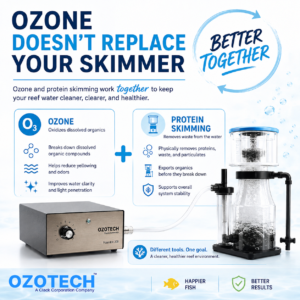
One common misconception is that adding an ozone generator means a protein skimmer is no longer necessary. In reality, ozone and protein skimming perform different jobs—and they can work extremely well together.
What Does a Protein Skimmer Do?
A protein skimmer uses tiny air bubbles to attract organic compounds from aquarium water. These compounds collect on the surface of the bubbles and are carried into the skimmer's collection cup, where they can be physically removed from the aquarium.
Protein skimming can help remove:
- Dissolved and particulate organic matter
- Proteins and other organic waste
- Waste associated with feeding and livestock
- Organic compounds before they continue to break down in the aquarium
In other words, a skimmer is an important export mechanism. It physically takes unwanted material out of the system.
What Does Ozone Do in a Reef Aquarium?
Rather than acting as a mechanical filter, ozone helps break down or alter certain dissolved organic compounds.
This can contribute to several noticeable benefits, including:
- Reduced yellowing of aquarium water
- Improved water clarity
- Reduced odors associated with organic compounds
- Improved light transmission through clearer water
This distinction is important: ozone doesn't simply "filter out" everything in the water. Its primary role is oxidation.
Ozone Doesn't Replace Your Protein Skimmer
Think of ozone and protein skimming as two different tools with complementary jobs.
Ozone oxidizes. The skimmer removes.
As ozone reacts with dissolved organic compounds, it can change their chemical characteristics. Protein skimming and other filtration methods can then help remove organic material from the aquarium system.
The result is a filtration strategy that addresses organic compounds in more than one way.
Instead of asking whether you should use ozone or a protein skimmer, the better question may be:
Why Water Clarity Matters in a Reef Aquarium
One of the most noticeable reasons reef keepers use ozone is improved water clarity.
Over time, dissolved organic compounds can give aquarium water a subtle yellow tint. Because the change happens gradually, it may be difficult to notice simply by looking through the aquarium every day.
But that yellowing doesn't just affect how the aquarium looks.
Clearer water can allow light to travel through the water more effectively. In a reef aquarium where corals depend on carefully managed lighting, maintaining good water clarity is an important part of the overall system.
Ozone can help oxidize some of the compounds responsible for yellowing, helping maintain the crisp, clear appearance reef keepers are trying to achieve.

What About ORP?
Ozone is also frequently discussed alongside oxidation-reduction potential, or ORP.
ORP is a measurement of the water's tendency to participate in oxidation and reduction reactions. It can provide useful information about the overall oxidative environment within an aquarium.
However, ORP should not be confused with a direct measurement of how much ozone is present in the water.
When ozone is used in a reef aquarium, monitoring and controlling the system appropriately is important. More ozone is not automatically better.
The goal is controlled ozone application as part of a properly designed aquarium filtration system.
Using Ozone With a Protein Skimmer
Protein skimmers are commonly used as a point of ozone introduction in marine aquarium systems, provided the skimmer and associated components are compatible with ozone.
Ozone Generator → Ozone-Compatible Tubing → Protein Skimmer → Activated Carbon / Appropriate Off-Gas Management
The exact configuration will depend on the aquarium, skimmer and equipment being used.
When designing an ozone system, reef keepers should consider:
- Ozone compatibility of tubing, seals and skimmer components
- Proper airflow through the ozone generator
- Appropriate ozone output
- ORP monitoring or control strategy
- Management of residual ozone and off-gas
- Use of activated carbon where appropriate
- Manufacturer recommendations for all connected equipment
Ozone should always be used as a controlled part of the filtration system, not simply added at the highest possible output.
Don't Forget About Air Quality
There's another factor that can have a significant impact on corona discharge ozone generators: humidity.
Corona discharge ozone generation performs best with a clean, dry air supply. High humidity can reduce ozone production and affect system performance.
Using properly conditioned intake air and maintaining the ozone generator according to manufacturer recommendations can help provide more consistent ozone output.
It's a small part of the system that's easy to overlook—but it can make a meaningful difference.
Where the Poseidon 200 Fits In
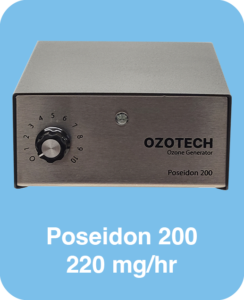
The Ozotech Poseidon 200 is designed specifically for aquatics applications and produces up to 220 mg/hr of ozone.
The Poseidon 200 provides a consistent source of ozone that can be integrated into an appropriately designed reef aquarium filtration system. Its serviceable design also makes routine maintenance straightforward—an important consideration for equipment that's expected to operate as part of a long-term aquarium setup.
For reef keepers already using a protein skimmer, adding a Poseidon doesn't mean replacing the equipment that's already doing an important job. It means giving that filtration system another tool.
Different Tools. One Goal.
A successful reef aquarium depends on multiple systems working together. Your protein skimmer helps remove organic waste.
Ozone helps oxidize dissolved organic compounds and maintain water clarity.
Other components—from biological filtration and activated carbon to lighting, circulation and regular maintenance—have their own roles as well.
That's why ozone shouldn't be viewed as a replacement for traditional aquarium filtration. It's another tool that can help optimize it.
Ozone + Protein Skimming: Different tools. One goal—a cleaner, clearer reef environment.